When a growing office in Lahore finally outgrows its tangle of analog handsets, the question is rarely whether to switch to internet-based calling. It is how to do it without inheriting dropped calls, echo, and a phone bill that swings wildly from one month to the next. Voice over IP has quietly become the default choice for Pakistani businesses that want clearer conversations and lower running costs, yet the transition still trips up teams that treat it as a simple hardware swap rather than a rethink of how the company talks to its customers.
This guide walks through what actually matters when you move office communication onto a data network. It is written for managers and IT staff who want practical direction instead of vendor jargon, covering everything from bandwidth planning to the small desk-phone details that decide whether staff enjoy the change or quietly resent it.
Why Local Offices Are Retiring Their Old Lines
The traditional PTCL landline served Pakistani businesses faithfully for decades, but it was never designed for the way modern teams operate. A single copper line carries one call. Adding capacity meant adding lines, and every extension involved a technician and a delay. IP telephony breaks that ceiling because voice travels as data across the same connection your team already uses for email and browsing.
The savings show up quickly. Internal calls between branches become free, international rates drop sharply through SIP trunk providers, and features that once cost extra, such as call recording, voicemail-to-email, and auto-attendants, arrive bundled in. For a call center in Karachi or a distribution firm with offices in three cities, those bundled features alone often justify the switch.
Bandwidth Is the Foundation, Not an Afterthought
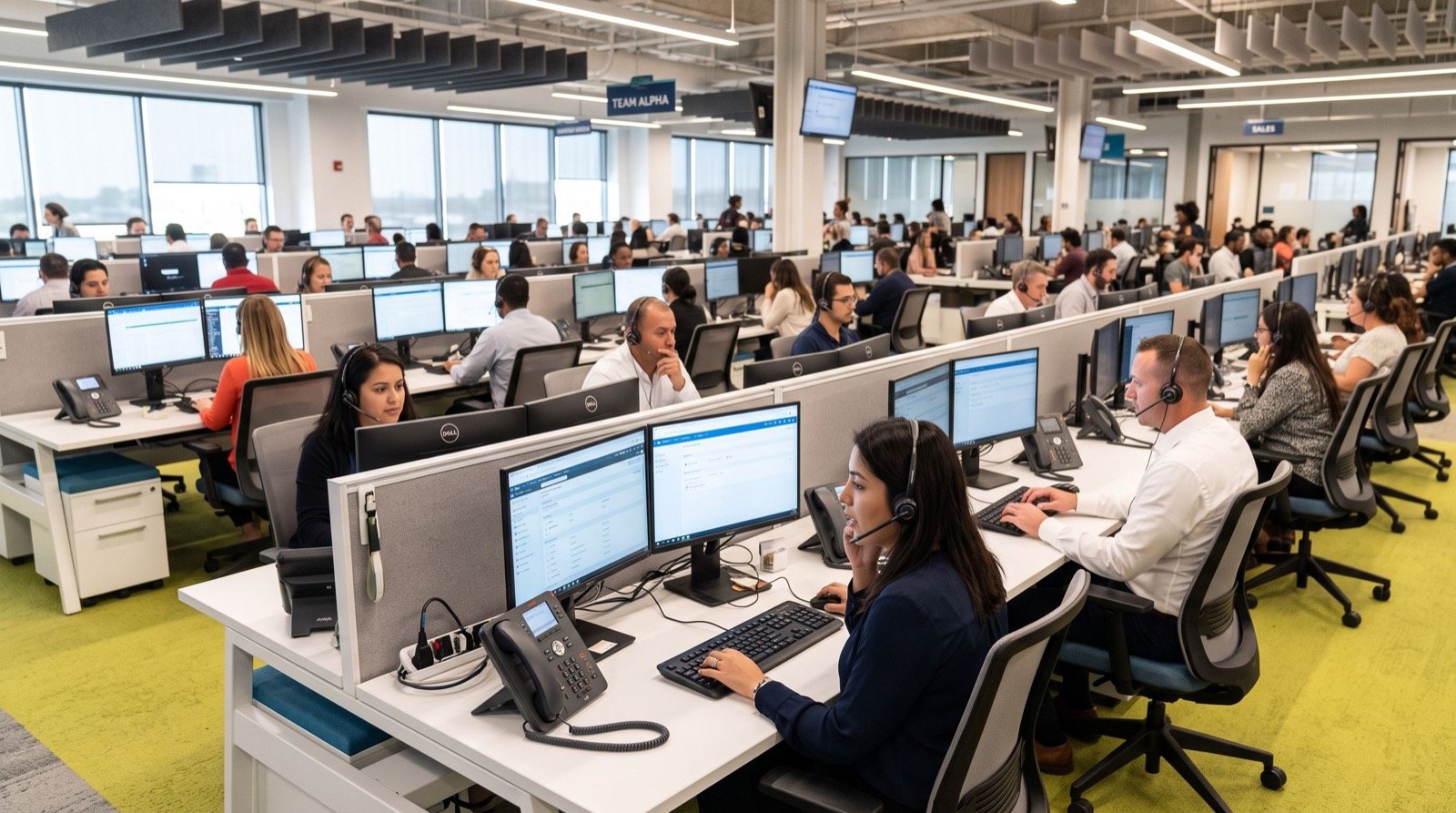
Every promising VoIP rollout that ends in frustration usually traces back to the same root cause: the network was never prepared for voice traffic. A single simultaneous call needs roughly 100 kilobits per second in each direction once you account for overhead. That figure sounds trivial until forty agents pick up their handsets at nine in the morning.
Before buying a single phone, measure your available upload speed, not just download, because voice leaves your building as much as it enters. Fibre connections have made this far easier across major cities, but even so, a business should reserve headroom rather than run at the edge of capacity. Quality of Service settings on your router, which prioritize voice packets over file downloads, are the difference between crisp calls and a caller who keeps asking you to repeat yourself.
Choosing Handsets That People Will Actually Use
Software softphones on laptops have their place, but most staff still want a dedicated device on the desk that rings, feels solid, and does not compete with a dozen browser tabs for attention. This is where hardware quality earns its keep. Reception desks, executives, and support agents each have different needs, and matching the phone to the role prevents both overspending and frustration.
Teams comparing the Best IP phones in Lahore quickly notice how much the daily experience depends on small ergonomics: the tactile feedback of the keypad, screen legibility under office lighting, and how many lines the device can juggle without confusion. A receptionist handling six lines needs something very different from an accountant who takes four calls a day.
Reception and front desk staff are best served by multi-line phones with a large display and rapid transfer keys, since they field calls for the whole building. Executives benefit from models with wideband audio, a full-colour screen, and Bluetooth for a wireless headset. Support agents who spend entire shifts on the line want comfortable handsets with dedicated hold and mute buttons that never require a second glance. Shared spaces, meanwhile, are happiest with rugged, simple units that survive constant handling by many different people. Matching each of these to its role, rather than standardizing on one model, is what keeps both cost and frustration down.
The Case for a Flagship Desk Phone
For roles where the phone is the primary tool, investing in a premium unit pays off in reliability and comfort. The Fanvil V61G Prime Business Phone illustrates what a modern executive handset offers: a bright colour display, wideband HD voice, gigabit Ethernet so the phone does not slow the computer plugged behind it, and enough programmable keys to manage a busy call flow at a glance. Devices at this tier are built to run continuously for years, which matters when a phone sitting on a manager’s desk is expected to simply work every single morning.
The temptation is always to buy the cheapest option across the board, but a mixed fleet, premium phones where call volume is heaviest and economical models elsewhere, usually delivers the best value. It concentrates spending where the business feels it most.
Security Deserves Equal Attention
Because VoIP rides on your data network, it inherits both the strengths and the risks of that network. Unsecured systems have been targeted for toll fraud, where attackers route expensive international calls through a compromised line overnight. The defences are straightforward but non-negotiable: change every default password, restrict international dialling to the accounts that need it, keep phone firmware updated, and place your telephony traffic on its own network segment where possible.
None of this requires a security specialist for a small office, but it does require discipline. A weak password on a single extension can undo an otherwise well-planned system, so treat the phone network with the same care you give your accounting software.
Planning the Cutover Without Chaos
The riskiest moment in any migration is the day you turn off the old system. A smart rollout runs both systems in parallel for a short window, porting numbers gradually and keeping a fallback in place. Staff should be trained before the switch, not during it, because a team learning transfer codes while a customer waits on the line creates exactly the bad first impression you were trying to avoid.
Working with an experienced local team that understands both the hardware and Pakistani network conditions removes most of this stress. They can pre-configure devices, test call quality on your actual connection, and be present on cutover day when the inevitable small surprises appear. The alternative, learning by trial and error while customers try to reach you, is a false economy.
Measuring Whether It Worked
A migration is not finished when the phones ring. Give it a month, then look at the numbers that matter: average call quality reports, how many calls were dropped, whether the monthly bill actually fell, and, most importantly, what staff say about their daily experience. Modern IP systems generate detailed call analytics that older lines never could, turning your phone system into a source of insight about response times and customer demand.
Key Takeaways
- VoIP cuts costs and adds features, but only when the network is prepared for voice traffic first.
- Measure upload bandwidth and enable Quality of Service before deploying any handsets.
- Match phone models to roles rather than buying one device for the whole office.
- Secure every extension with strong passwords and restricted international dialling.
- Run old and new systems in parallel during the cutover to avoid downtime.
Making the Move With Confidence
Switching a business to internet telephony is less about the technology and more about preparation. Offices that plan their bandwidth, choose handsets to suit each role, lock down security, and rehearse the cutover almost always end up wondering why they waited so long. The clearer calls, lower bills, and richer features are real, and they compound over time. Approach the change as a considered upgrade rather than a rushed swap, and your phones will stop being a source of complaints and start being a quiet competitive advantage.